

Best Selkirk Pickleball Paddles 2026: Full Lineup
Selkirk is the first brand most players name, and the most argued about on price. Here is the full 2026 lineup with measured numbers, the SLK Halo question answered, and where the money actually goes.

No brand pays to be here or sees the page first.
I play every paddle at least 24 games before I rate it.
Same instruments, same ball, twelve swings per measurement.
Introduction
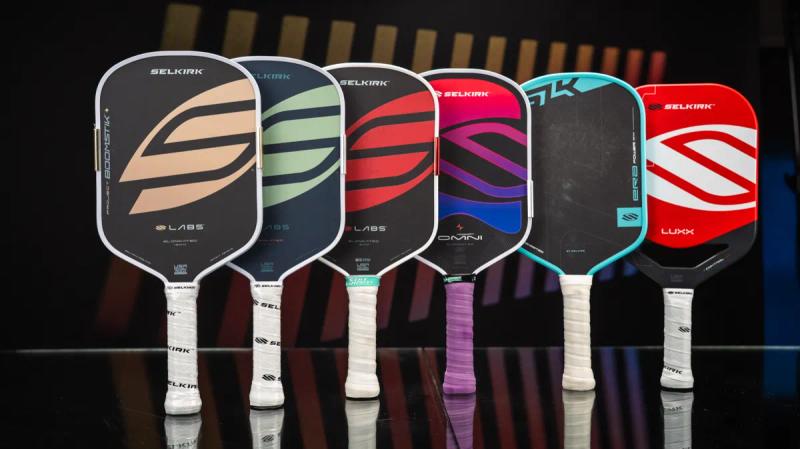
Selkirk's 2026 lineup runs from the $333 Boomstik down to the $180 SLK Dauntless, with the Omni at $300 and the SLK ERA Power at $200 in between. The shape decision matters more than the model name, so pick the widebody for forgiveness and the elongated for reach and spin, then pick the tier for your budget. The biggest news isn't a paddle at all: on May 12, 2026, Selkirk bought Bread & Butter, which tells you more about where the brand is heading than any spec sheet. To filter the whole lineup by your own numbers, run the Paddle Finder, and grab the current Selkirk discount code before you buy.
Why Selkirk Is Still The Brand To Beat, And The One Everyone Argues About
Selkirk is the first name most players say when you ask them to name a paddle company, and it's the brand I field the most questions about by a wide margin due to the Boomstik and now Omni paddles. No other company owns that much mindshare. Walk onto any court and you'll spot the logo, and the Boomstik gets argued over more than almost any paddle, half the time misspelled as "boomstick." You can browse every Selkirk model we've logged on the Selkirk brand page.
So yeah, the interest is real. The skepticism is too, and it's worth saying out loud before we get into the paddles. Selkirk prices at the top of the market. The Boomstik is $333. The Omni is $300. When a $280 Ronbus Ripple R5 or a $250 Six Zero Black Opal posts higher raw power numbers than the Boomstik, the obvious question is whether you're paying for performance or for the logo. The honest answer, which I'll back with data below, is that you're paying for three things: (1) power- that's a given- the (2) MOI weighting system, and the (3) InfiniGrit surface durability. Whether those are worth $50 to $80 over the others depends entirely on what you value.
Here's what gets lost in the price fight. Selkirk's 2026 paddles are genuinely very good. The Gen 4 foam-core builds carry the lineup, and the Omni does something with its floating foam core that I hadn't felt before. The ERA Power isn't a foam core, it's a Gen 3 honeycomb polypropylene build, and it's still one of the more dialed-in paddles you can buy out of the box at its price. And the lineup is wide enough that there's a Selkirk for a $180 budget and a Selkirk for a $333 one. The trick is matching the tier to your game instead of buying the most expensive one on the wall. If you're not sure how to weigh shape against swing weight against price, our how to choose a pickleball paddle guide lays out the hierarchy.
The Selkirk Lineup At A Glance
Paddle | Shape | Spin | Swing | Price | Best For |
|---|---|---|---|---|---|
Standard | Near average | Near average | $333 | Power with a big, stable face | |
Elongated | Above average | Above average | $333 | Reach, spin, two-handed backhands | |
Elongated | Near average | Above average (heavy) | $300 | All-court players who tinker | |
Standard | Above average | Near average | $300 | Forgiving all-court | |
Standard | Near average | Near average | $200 | Control-first value | |
Elongated | Below average | Above average | $200 | Plug-and-play all-court | |
Elongated | Below average | Above average | $180 | More control |
Previous gen and budget
Paddle | Shape | Spin | Swing | Price | Best For |
|---|---|---|---|---|---|
Multiple | Above average | Varies | $288 | Tunable Labs project builds | |
Standard/Elong | Near average | Near average | $250 | Edgeless control feel | |
Standard | Below average | Near average | $230 | Legacy Gen 2 control |
Use code INF-MPB for 10% off at Selkirk, which knocks the Boomstik down to about $300 and the ERA Power to $180. Want to put two of these head-to-head on the numbers? Drop them into the paddle comparison tool.
Selkirk Labs Boomstik ($333)
- 1. Selkirk Boomstik Widebody 16mm — Serve speed 60.7 mph (radar-gun tested, 78th percentile) · Spin 2188 rpm (camera-measured, 21st percentile) · Twist weight 7.8 (99th percentile) · Static weight 8.7 oz (99th percentile) · Swing weight 113 (43rd percentile) · Core 16 mm · Price $333
- 2. Selkirk Boomstik Elongated 16mm — Serve speed 60.8 mph (radar-gun tested, 83rd percentile) · Spin 2294 rpm (camera-measured, 80th percentile) · Twist weight 6.7 (67th percentile) · Static weight 8.2 oz (89th percentile) · Swing weight 117 (73rd percentile) · Core 16 mm · Price $333
Selkirk Omni ($300)
- 1. Selkirk Omni 16mm — Serve speed 60.5 mph (radar-gun tested, 61st percentile) · Spin 2270 rpm (camera-measured, 55th percentile) · Twist weight 6.9 (80th percentile) · Static weight 8.3 oz (94th percentile) · Swing weight 122 (94th percentile) · Core 16 mm · Price $300
- 2. Selkirk Omni Widebody 16mm — Serve speed 60.3 mph (radar-gun tested, 50th percentile) · Spin 2282 rpm (camera-measured, 65th percentile) · Twist weight 7.8 (99th percentile) · Static weight 8.3 oz (92nd percentile) · Swing weight 114 (46th percentile) · Core 16 mm · Price $300
SLK ERA Power ($200)
- 1. Selkirk SLK Era Power Widebody 16mm — Serve speed 59.9 mph (radar-gun tested, 36th percentile) · Spin 2237 rpm (camera-measured, 40th percentile) · Twist weight 7.2 (91st percentile) · Static weight 8.2 oz (84th percentile) · Swing weight 112 (31st percentile) · Core 16 mm · Price $200
- 2. Selkirk SLK Era Power 16mm — Serve speed 60.4 mph (radar-gun tested, 54th percentile) · Spin 2155 rpm (camera-measured, 15th percentile) · Twist weight 6.4 (48th percentile) · Static weight 8.2 oz (82nd percentile) · Swing weight 119 (85th percentile) · Core 16 mm · Price $200
SLK Dauntless ($180)
- Selkirk SLK Dauntless Elongated 16mm — Serve speed 58.8 mph (radar-gun tested, 17th percentile) · Spin 2163 rpm (camera-measured, 16th percentile) · Twist weight 6.7 (67th percentile) · Static weight 7.9 oz (28th percentile) · Swing weight 118 (80th percentile) · Core 16 mm · Price $150
Frequently asked questions
- Boomstik or ERA Power, which is right for me?
- If you want power with a stable face, the Boomstik . If you play an all-court or control game and care about value, the ERA Power . The Boomstik is noticeably hotter on power and pop and far more stable on mishits, but it costs $133 more and carries a heavier static weight. Most rec players are better served by the ERA Power. Players who genuinely live on offense get more from the Boomstik.
- Omni or Boomstik, power or all-court?
- The Boomstik is a power paddle. The Omni is a true all-court paddle with that dual-stage foam feel, give on the soft shots and crisper response on drives. If your game is built on driving and speeding up, the Boomstik. If you want one paddle that resets, dinks, and drives at a high level, the Omni. They're solving different problems, so pick by your style, not by the $33 price gap. If you're still torn, run both through the Paddle Finder .
- Is the Selkirk Labs membership worth it?
- Selkirk Labs is the program behind paddles like the Boomstik, and it gets you early access and the lifetime warranty on Labs releases. The warranty is the real value, and it's worth having on a $333 paddle that's still in an active refinement cycle. The early-access perk only matters if you buy at launch. For most players, just buy the paddle and register it. If warranty coverage drives your decision, our paddle return and warranty policy report ranks Selkirk against the other major brands.
- What replaced the SLK Halo?
- The SLK Dauntless . Selkirk discontinued the Halo in early 2026 during an SLK line reset and slotted the Dauntless in at the bottom of the range. It's not a direct copy. The Halo was a honeycomb paddle, and the Dauntless is a full foam-core control paddle, so the feel is softer and more muted. If you loved the Halo for its pop, the Dauntless won't replace that. If you loved it for control, the Dauntless leans even further that way.
- Is Selkirk worth the premium over JOOLA or Six Zero?
- On raw output per dollar, it depends. A $280 JOOLA Perseus or a $250 Six Zero Black Opal plays well, as compared to the $333 Boomstik. What Selkirk sells over those brands is the MOI weighting system, InfiniGrit surface durability, U.S. design and assembly, and the warranty program. If those matter to you, the premium is defensible. If you only care about the performance number, JOOLA and Six Zero give you more for less, and that's a fair call to make. Compare the full lineups on the best JOOLA paddles page.
- How long does the Boomstik grit last?
- Longer than raw carbon. But...not by much in my testing. Selkirk's InfiniGrit is a sprayed-on textured coating built to hold spin roughly three times longer than a standard raw carbon face, and in my testing the spin window stayed open past the usual break-in fade. I've seen surface smoothing within around 60 hours of hard play, so if you're playing daily, expect to monitor it. For typical rec volume, it holds up well. If surface grip is your priority, the spin leaderboard ranks the highest RPM generators I've measured.
- What did the Bread & Butter acquisition mean for players?
- On May 12, 2026, Selkirk acquired Bread & Butter Pickleball , backed by a $30M investment from Bluestone Equity Partners that valued Selkirk at $200M. B&B keeps operating independently, and the Sapusek family stays on, so in the near term, nothing about the paddles changes. The community is split. Optimists think Selkirk's scale helps B&B grow. Skeptics worry that private-equity involvement leads to price increases over time. There's no evidence of that yet, and the smart move is to judge it by what ships, not by the headline.
- Can I still use the Bread & Butter Loco at tournaments?
- Yes. All three Loco shapes, Standard, Elongated, and Hybrid, are USA Pickleball approved, the same approval Selkirk's own 2026 lineup carries, so the Loco is legal across USAP-sanctioned events. Approved lists do get updated and some events run under different sanctioning bodies, so it's still smart to confirm your exact paddle is on the approved list for the event you're entering. But there's no Selkirk-versus-B&B approval gap to worry about here.
- Which paddle on this list has the highest measured spin RPM?
- Selkirk Boomstik Elongated 16mm — 2294 rpm, camera-measured on the same protocol as every other paddle I test.
- Which paddle on this list has the fastest measured serve speed?
- Selkirk Boomstik Elongated 16mm — 60.8 mph, radar-gun tested.
- What is the cheapest paddle on this list?
- Selkirk SLK Dauntless Elongated 16mm at $150.
Selkirk Labs Boomstik ($333)
Gen 4 foam core | 16mm | USA Pickleball | $333
The Boomstik is Selkirk's flagship power paddle and the most polarizing thing the brand makes. It's a full foam-core build with no traditional honeycomb, wrapped with an EVA Power Ring and finished with InfiniGrit, Selkirk's sprayed-on textured surface. The headline feature is the MOI Tuning System: fixed weights clamped to the edge guard that push mass to the perimeter and drive twist weight up. I tested both shapes over several weeks, including time at Selkirk HQ with the product team, and the system does what they say it does. The face stays stable on off-center contact in a way most power paddles don't manage. The complete teardown is in the full Boomstik review.
- Selkirk Boomstik Widebody 16mm
Spin 2,188 RPM · Serve speed 60.7 mph · Weight 8.65 oz · Swing weight 113.2
Boomstik Widebody. This is the more forgiving of the two. Twist weight sits in the 99th percentile, which is about as stable as a paddle gets, and the sweet spot holds up laterally on mishits. Firepower lands at 85, with serve speed and pop both above average. The catch is mass. Static weight is 8.65 ounces, near the top of the entire field, so even though the swing weight reads near average on paper, it plays slower in hand than the number suggests. Weight-sensitive players will feel it in long net exchanges. → Buy the Boomstik Widebody ($333)
One honest note from my testing. This is a Selkirk Labs release, which means it's still in an active refinement cycle. My elongated unit developed a visible seam across the face around 30 games in, and the edge guard started lifting on one side. Neither affected play, and Selkirk replaced it immediately under the Labs lifetime warranty. But on a $333 paddle, you want polished retail-level QC, and the Labs model isn't quite there yet. Go in with eyes open. If the Boomstik makes your shortlist, it's also in the running on our best power pickleball paddles guide.
- Selkirk Boomstik Elongated 16mm
Spin 2,294 RPM · Serve speed 60.8 mph · Weight 8.22 oz · Swing weight 117.15
Boomstik Elongated. The elongated trades some of that lateral forgiveness for reach, leverage, and spin. Spin RPM comes in above average here, serve speed is above average, and the 5.75-inch handle works well for two-handed backhands. It's quicker to accelerate than the widebody but needs sharper timing in hand battles. At 8.22 ounces it's still not light. This is the shape I'd point a driving, point-pressuring player toward. → Buy the Boomstik Elongated ($333)
Selkirk Omni ($300)
Gen 4 foam core | 16mm | USA Pickleball | $300
The Omni is the 2026 all-court paddle, and it's the one that surprised me. Selkirk runs a three-layer foam core where the center layer floats inside the paddle, unbonded from the outer EVA ring. At low impact you feel the soft center, so dinks, drops, and resets have real give. Swing harder and the stiffer outer ring engages, so drives and overheads come off crisper. I went back and forth before I trusted it, tested it indoors and outside in the heat, and the pattern held every time. Selkirk calls it adaptive flexibility, and after two weeks that's an accurate description. The full Omni review has the weight-setup breakdown and all the lab data.
Both shapes share an adjustable side-weight system that clicks in and out cleanly. Moving the weights toward the heel makes the paddle swing lighter for hand battles. Moving them up loads the head for drives. You can dial this in without tape or glue, which is a practical edge over most paddles in the category. One caution: the edge guard came loose on my unit during testing, same pattern I saw on the Boomstik, so keep an eye on it.
The InfiniGrit surface on the Omni is built for durability over a raw spin ceiling, and it stays inside USAP limits rather than chasing a hyper-textured number. If you've been playing a max-grit paddle that's only legal in certain formats, this will feel different. Not worse. You can take it to any tournament, league, or club night without checking the approval status. The Omni also lands on our best all-court pickleball paddles shortlist, and if the foam-core construction is new to you, the Gen 4 foam core guide explains what's actually happening inside the paddle.
- Selkirk Omni 16mm
Spin 2,270 RPM · Serve speed 60.5 mph · Weight 8.27 oz · Swing weight 122.3
Omni 16mm Elongated. Same core, more reach, and a noticeably heavier swing. The swing weight reads well above average, so this one plows through the ball on drives but feels a step slower at the kitchen. It's the pick if you want the foam-core feel with elongated leverage and you don't mind the mass. → Buy the Omni Elongated ($300)
- Selkirk Omni Widebody 16mm
Spin 2,282 RPM · Serve speed 60.3 mph · Weight 8.25 oz · Swing weight 113.7
Omni Widebody. This is the more forgiving setup, with twist weight near the top of the field and a near-average swing weight that keeps it maneuverable. Spin is above average, pop is above average, and it's the easier of the two to pick up and play. If you want one paddle that handles both phases of the game without a heavy build, start here. → Buy the Omni Widebody ($300)
SLK ERA Power ($200)
Gen 3 | 16mm | USA Pickleball | $200
The ERA Power is, in my opinion, the value pick of the lineup. It's a Gen 3 foam-enhanced build, and despite the "Power" name, it leans all-court.
For $200, or $180 with code INF-MPB, the ERA Power is where I'd send most players who want a Selkirk without the flagship price. It does more out of the box than the Dauntless and gives up surprisingly little to the Boomstik on the soft game. It's also one of the stronger options on our best pickleball paddles under $150 list once the code is applied.
- Selkirk SLK Era Power Widebody 16mm
Spin 2,237 RPM · Serve speed 59.9 mph · Weight 8.19 oz · Swing weight 111.7
The widebody posts one of the higher control scores I've measured, with twist weight in the 90th percentile and a near-average swing weight that keeps it quick. Firepower is 52, so this isn't a banger's paddle. It's a stable, forgiving all-court frame for players who'd rather place the ball than blast it. → Buy the ERA Power Widebody ($200)
- Selkirk SLK Era Power 16mm
Spin 2,155 RPM · Serve speed 60.4 mph · Weight 8.17 oz · Swing weight 119.2
The elongated version is the more complete all-court paddle of the two. It came out of the box dialed in: static weight, swing weight, and balance point all landed without needing tape, which is rare in this category. Drives have enough pop to finish points without being explosive, and resets stay composed in transition. The trade is a higher swing weight, so hand exchanges at the kitchen feel a touch slower than lighter elongateds. Spin is below average here, so if you live on roll volleys, the widebody or a grittier comp serves you better. I broke the elongated down shot by shot in the SLK ERA Power review. → Buy the ERA Power Elongated ($200)
SLK Dauntless ($180)
Gen 4 foam core | 16mm | USA Pickleball | $180
What the Dauntless does well is the short game. The pure-foam core absorbs pace, so dinks feel easy, resets feel controlled, and placement stays consistent. Twist weight is high and off-center hits stay in play. The defining trait is dwell. The ball sits on the face long enough that some players say it doesn't feel like you made contact at first. Soft, muted, forgiving.
The problem is everything else. Serve speed is below average, spin RPM is below average, and pop is well below average. Swinging harder doesn't close the gap. The honest one-line summary from testing was "feels amazing until you start driving." Adding weight at the sides firms up the response a little, but at $180 you can find paddles that do more out of the box. This is a true foam control paddle, which is rare and genuinely interesting, but it's niche. Buy it only if the soft game is your whole game and you don't drive much. I made the full value case in the SLK Dauntless review, and if pure touch is what you're after, compare it against the field on our best control pickleball paddles guide. → Buy the SLK Dauntless ($180)
- Selkirk SLK Dauntless Elongated 16mm
Spin 2,163 RPM · Serve speed 58.8 mph · Weight 7.89 oz · Swing weight 118.45
The Dauntless is the paddle that answers the "what happened to the Halo" question, so let's start there. Selkirk discontinued the SLK Halo in early 2026 as part of an SLK line reset, and the Dauntless is the foam-core control paddle that took its slot at the bottom of the range. If you came here searching for a Halo replacement, this is it. It's not a like-for-like swap. The Halo was a honeycomb build, and the Dauntless is full foam, so the feel is different.
Previous Generations And Other Lines
A few Selkirk paddles sit outside the main four tiers. The Project 008 series ($288) is the Labs project line, a set of thermoformed EVA-foam builds in Epic, Maxima, Invikta, and Tour shapes, aimed at players who want to tune balance and shape to taste. The LUXX Control Air ($250) is the edgeless, unibody control option for players who want a softer, quieter feel. The Vanguard Pro Epic ($230) is the legacy Gen 2 honeycomb paddle, still available and still a fine control frame, but a generation behind the foam-core builds on spin and forgiveness. Use code INF-MPB on any of them. If budget is the real constraint, the best pickleball paddles guide spans every brand and price.
How Selkirk Stacks Up Against The Field
This is where the price question gets answered with numbers instead of opinions.
The Boomstik against the premium power field. At $333, the Boomstik is the most expensive paddle in its class, and it does not lead its class on raw output. The Ronbus Ripple R5 V2 ($280) posts a Firepower of 93 to the Boomstik Widebody's 85. The Six Zero Black Opal ($250) hits 91 Firepower with higher spin. The JOOLA Perseus 3S 16mm ($280) matches it on power for $53 less. So what's the $50 to $83 premium buying? Two things the spec table doesn't capture in a Firepower number: the MOI weighting that gives the Boomstik its 99th-percentile twist weight, and the InfiniGrit surface that holds its texture roughly three times longer than raw carbon. If torsional stability and grit longevity are what you're after, the Boomstik earns its slot. If you just want the most pace per dollar, the field beats it. The whole high-output class is ranked on our best power paddles page.
The Omni against the foam all-court field. Here the comparison is closer. The JOOLA Perseus Pro V 16mm ($299.99) matches the Omni on price and Firepower almost exactly, and you can read how that whole line tested in the JOOLA Pro V review. The CRBN 2 TruFoam Genesis ($279.99) is a full-foam all-court build that comes in $20 cheaper with higher spin. The Six Zero Coral Pro Hybrid ($220) undercuts the Omni by $80 and posts a much higher spin number, which I covered in the Coral Pro review. The Omni's differentiator is that floating-core feel and the toolless weight system, which neither CRBN nor Six Zero offers. If you value adjustability and the dual-stage feel, the Omni holds up. If you just want foam-core spin for less, the Coral Pro is the value play.
The ERA Power against the sub-$200 field. This is the toughest neighborhood. The Honolulu J6CR ($195) is a Gen 4 foam paddle with a much higher Firepower and spin for $5 less, and it plays fast, as I covered in the J6CR review. The 11SIX24 Vapor Power ($170) brings elite spin for $30 less. The ERA Power answers with out-of-the-box balance and a higher control score, but on raw spin and power per dollar, the newer Gen 4 builds from smaller brands are genuinely ahead. The Selkirk name and the plug-and-play tuning are the reasons to pick it.
The Dauntless against the budget control field. The GRUVN MUVN-16HD Full Foam ($169) is a full-foam control paddle that's $11 cheaper and posts dramatically higher spin (2,290 vs 2,163 RPM). The Pickleball Apes Harmony X ($179.99) matches the Dauntless on price and Firepower with more spin. The Dauntless competes on Selkirk's warranty and brand support, not on the spec sheet.
For the bigger cross-brand picture, the best JOOLA paddles and best 11SIX24 paddles lineup pages cover two of Selkirk's most common alternatives in full.
Who Each Paddle Is For
Boomstik Widebody: Power players who pressure with drives and want the largest, most stable face Selkirk makes. You have to accept a heavy static weight and you have to value stability over hand speed.
Boomstik Elongated: Aggressive players who want reach, the higher spin number, and a handle built for two-handed backhands. Sharper timing required at the kitchen.
Omni Widebody: All-court players who want one forgiving paddle for both phases of the game, with a weight system they can tune without tape.
Omni Elongated: All-court players who want the foam-core feel with elongated leverage and don't mind a heavy swing weight that plows through drives.
SLK ERA Power Widebody: Control-first players who want Selkirk build quality and a quick, stable, forgiving frame for $200 or less.
SLK ERA Power Elongated: All-court players who want a paddle that's dialed in out of the box and don't want to mess with weighting.
SLK Dauntless Elongated: Soft-game specialists who live at the kitchen, want maximum dwell and forgiveness, and rarely drive the ball.
The Call
If you want the best all-around Selkirk for most players, it's the Omni Widebody at $300. That's my pick. It does both phases of the game well, the weight system lets you tune it without tape, and it's the most complete paddle in the lineup. If value is the priority, the ERA Power at $200 gives up surprisingly little and saves you real money. The Boomstik is the right call only if power and stability are your whole game and you're fine paying for the MOI system and the warranty. And if you're looking for more control, the Dauntless might work, though I'd recommend something else.
Shop the full lineup at Selkirk with code INF-MPB for 10% off, filter every paddle by your own spec priorities in the Paddle Finder, or put any two side by side in the comparison tool.
Disclosure
Disclosure: Paddles in this post may have been provided by the brand at no cost. No money changed hands and no content was required in exchange. Affiliate links are used where noted. Purchases made through these links support this site at no additional cost to you.
Watch on YouTube: Best Selkirk Pickleball Paddles 2026: Full Lineup
Watch on YouTube: Best Selkirk Pickleball Paddles 2026: Full Lineup
Watch on YouTube: Best Selkirk Pickleball Paddles 2026: Full Lineup